A field guide :: no costume required
What is a
meatsuit?
TOMB · PRISON · BAG · SUIT · PILOT
Meatsuit noun, slangthe human body, regarded as a garment, a vehicle, or temporary housing for whoever you believe yourself to be.
You are wearing one right now.
This page is the field guide
- where the word came from
- everywhere it lives
- the twenty-four-century argument hiding inside it
- the one thing almost nobody uses it for

CH-02 :: THE JOKE YOU ALREADY KNOW
The joke you already know.
Somewhere in your feed lives a version of this sentence.
You are a ghost piloting a bone mech wrapped in a meat suit. Or a nervous system piloting a skeleton. Or the block-text classic :: a ghost driving a meat-covered skeleton made from stardust, so fear nothing. There's the jellyfish version. There's the magic-skeleton version :: meat, electricity, and imagination :: earnest enough to be praised by professional rationalists and to grow into an actual motivational book.
Notice two things the meme always does. First, it shrinks existential dread down to a costume gag :: that's the comfort. Second, it always includes a pilot. Every single version. Hold that thought.

CH-03 :: ORIGINS
Where did "meatsuit" come from?
The TV show Supernatural (2005 to 2020) certainly added to the popularity of the term. The show didn't necessarily coin it :: the meat-as-body lineage is older, as the next channel shows :: but across fifteen seasons meatsuit became a central part of the show's taxonomy :: the demons' word for the human bodies they possess, adopted through gritted teeth by the hunters who fought them.
And the taxonomy is precise.
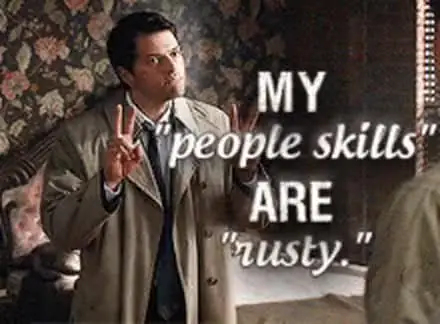
CONSENT
Vessel :: the owner says yes
Meatsuit :: never asked
INJURY
Vessel :: healed
Meatsuit :: suppressed, not healed
LONG TERM
Vessel :: survivable
Meatsuit :: a slow death sentence for the tenant
By the late seasons, even God is wearing one.
If you believe Metatron, anyway. From there the word jumped the fence into general internet usage, where it has lived ever since.

CH-04 :: THE OLDER SIGNAL
The word is older than the show.
Before demons, hackers.

In William Gibson's Neuromancer (1984), the console cowboy Case carries the elite hacker's relaxed contempt for the flesh :: the body was meat, and cyberspace was the only place worth living. Then his nervous system gets burned, he can't jack in, and the meat he despised becomes his cell. The novel's slang seeded a whole vocabulary :: meatspace for the physical world, meat puppet for a body running on automatic with nobody home :: the nightmare inverse of everything this page is headed toward.
Look at the cover. The deck ate his head and the cigarette is still burning.
Seven years later, Terry Bisson's short story "They're Made Out of Meat" (Omni, 1991) staged the joke from the far side :: two aliens, pure dialogue, flatly refusing to believe that meat can think. The story has been quoted in philosophy and cognitive science ever since.
CH-05 :: THE OLDEST SIGNAL
The joke is 2,400 years old.
Ancient Greece got there first, as usual.
The pun is soma / sema :: body and tomb, one letter apart. It has Orphic roots, gets its first surviving pithy expression in Plato's Gorgias, and saturates the Phaedo. Plato even upgraded the metaphor :: the Orphics said tomb, he preferred prison. TikTok's flesh prison is a faithful translation across twenty-four centuries.
Classicists will tell you the context is gentler than the slogan :: read in place, the pun is about having a right relationship with the body, and the later Platonic tradition treated embodiment as ordered rather than catastrophic. But slogans travel farther than context. They always have.
Twenty-four centuries of telling the body it is the problem.
Did C.S. Lewis say "You don't have a soul. You are a soul. You have a body"?
No. It's one of the most-shared quotes on the internet and one of the most misattributed. The C.S. Lewis Foundation lists it plainly as not his :: the trail runs back to an 1892 Quaker periodical crediting the sentiment, secondhand, to George MacDonald, and the closest famous published variant appears in Walter M. Miller Jr.'s A Canticle for Leibowitz (1959). Lewis, for the record, built worlds where the trees are alive and the god is a lion you can touch :: a strange mascot for team ghost. And the older tradition he actually belonged to keeps insisting the answer is both/and :: you don't have a body like luggage. You are one, too.
σῶμαsoma::body
σῆμαsema::tomb
one letter apartthe whole argument fits in the gap
CH-06 :: FIELD GLOSSARY
The meatsuit's extended family.
meatbag
Robot slang for organics. Coined by Bender :: it is literally his second line in the 1999 Futurama pilot :: and made famous by HK-47, the assassin droid of Star Wars: Knights of the Old Republic (2003), whose writer reasoned that from a robot's point of view humans are mostly alarming fluids and sloshing. In the lore, HK-47 first used it on one specific Sith lord; his master found it funny and programmed him to say it to everyone. source
meat popsicle
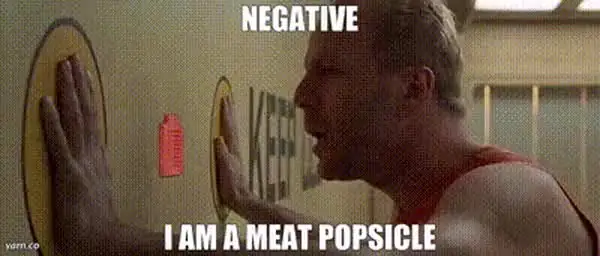
Asked by a police scanner if he is classified as human, Korben Dallas answers :: negative, I am a meat popsicle. Still alive as a greenscreen meme template, because deadpan denial of your own humanity never goes out of style. Quiet crossover :: the novelization was written by Terry Bisson, who also wrote "They're Made Out of Meat." Same author, both ends of the meat canon. source
ugly giant bags of mostly water
Star Trek: The Next Generation, “Home Soil” (1988). A crystalline lifeform's verdict on humanity. Data, consulted, agrees the description is accurate. Trivia :: the script says over ninety percent water; the real figure is nearer sixty. Data was flattering us. source
Edgar suit
Men in Black (1997). A giant alien bug kills a farmer and wears his decomposing skin around New York. The film took home the makeup Oscar partly on the strength of the slow-rot continuity. One retrospective describes the bug's mediocre skill at piloting its fleshy disguise :: noted, because even the worst pilot in cinema is still called one. source
flesh prison
The darker sibling. Urban Dictionary defines it as, verbatim concept, the human body :: a meat suit. Gen Z largely meets it through ULTRAKILL's Flesh Prison boss fight, which lives inside a multimillion-post TikTok tag cluster. Plato's upgrade, still shipping. source
meatspace
The physical world, as opposed to the digital one. Straight out of the cyberpunk novels. If you've ever said it in a meeting, you were quoting Case's prejudice. source
bone mech
The meme's word for your skeleton, which you are apparently piloting. See :: the joke you already know.
wetware
Your nervous system, described the way an engineer would. Hardware, software, wetware. The joke is that the wet part is the one that wrote the other two.
CH-07 :: THE MEATSUIT DISCOGRAPHY
Played loud, sung against.
The word lives in heavy music, and nearly always as the antagonist.
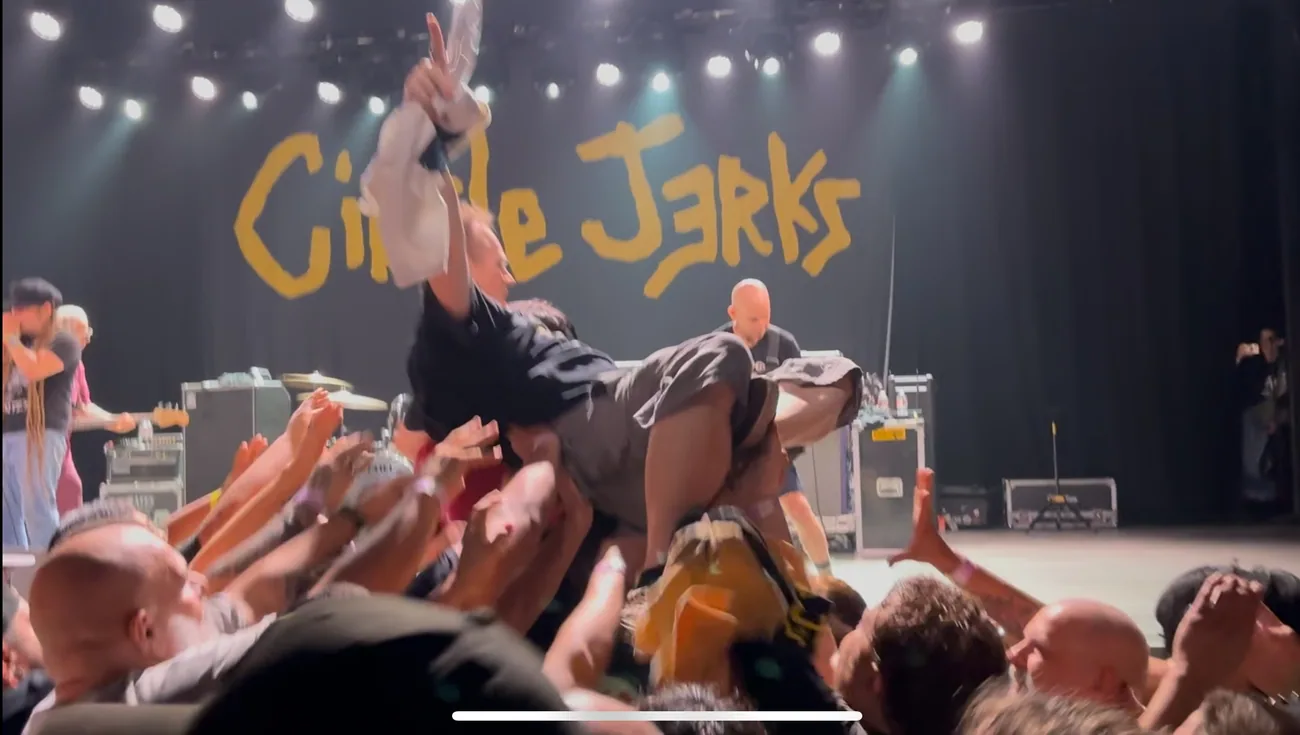
Heavy music is where the argument with the body gets played at full volume. Worth noticing which side the lyrics are usually on. One exception is playing bars twenty minutes from where this page was written :: a band who took the word as a name rather than an enemy.
CH-08 :: THE MINORITY REPORT
The defenders of the meat.
Scattered through everything above runs a quieter thread.
Data, insulted along with the rest of us, simply agrees the description is accurate :: no contempt anywhere in the circuit. A widely shared essay by a severely disabled writer :: the person with the strongest possible claim on the prison metaphor :: refuses it, and asks what changes if the body is a landscape to explore instead, with its own weather, moods, and landmarks. Theologians of incarnation keep filing the both/and brief. The later Platonists kept softening the prison back into a school. And Gibson, who wrote the meat's most famous insult, also wrote its best defense.
Notice who files the minority report :: almost no one for whom the body was simply a given.
The defense of the meat comes from its borders :: the disabled, the overwhelmed, the machine, the mystic.
The people who had to think about it.
CH-09 :: THE TURN
Your suit is already reading.
Here is what the entire contempt tradition missed.
What the research keeps confirming :: the suit is not waiting for instructions. Interoception :: often called the eighth sense :: is the brain's continuous reading of the body's internal state. Heartbeat, breath, gut, temperature, the whole weather system under the skin, integrated through the brainstem, thalamus, insula, and cingulate cortex. It appears to be foundational to emotion and self-awareness :: not decoration on top of thinking, but part of where feeling comes from.
The suit was reading the whole time. Nobody was reading back.
And it trains. Clinicians use interoceptive exposure to teach people to work with panic sensations rather than be flown by them. Sensing inward is a skill with a learning curve, like anything else a person practices.
Which corners the question this page has been circling since the first meme :: if the body is already this intelligent, who exactly is the pilot?

CH-10 :: THE EMPTY SQUARE
Every noun is passive except one.
Run the noun audit one last time.
Every other word in the family is something you are sealed in, stuffed in, frozen in. Pilot is the only one that implies practice :: skill, relationship, something you can get better at. And here's the strange part :: the meme culture reaches for it constantly. Ghost pilots. Jellyfish pilots. Skeleton drivers. And it only ever uses the word to defuse dread. Never as something you could actually train.
Nobody was using the word as a practice. What follows is one pilot's log :: mine. Time to take the costume off.


OFF INSTRUMENT :: ONE PILOT'S LOG
Here is mine, and it goes the other way.
What the practice is for
Sense, interpret, and participate in reality :: at higher and higher levels of complexity, without collapsing.
Those three are the skill. Nothing else on this page is the skill. Build them and the rest follows on its own :: you receive more of what is actually there, process it without drowning in it, and transmit what you actually meant. More elegantly. And, it turns out, with far more enjoyment.
Everything above this line is other people's answer :: the tomb, the prison, the bag, the popsicle, the suit. Twenty-four centuries of insults aimed at the meat.
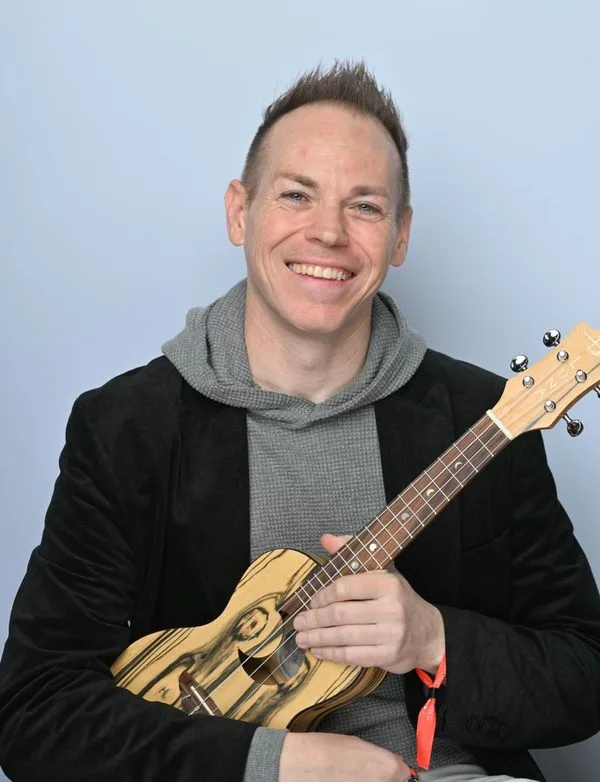
Hi. I'm Ryan Today. I have a handful of stage characters. On another site, one of them :: Skex Pl'nesh, a gargoyle/imp who sings in an invented language :: fronts a psychedelic horror circus of light and love. People assume the character came first and the philosophy grew up around it. It was the other way around, and the honest order matters. So here is what actually happened, out of costume, before you ever meet the costume.
The didgeridoo.
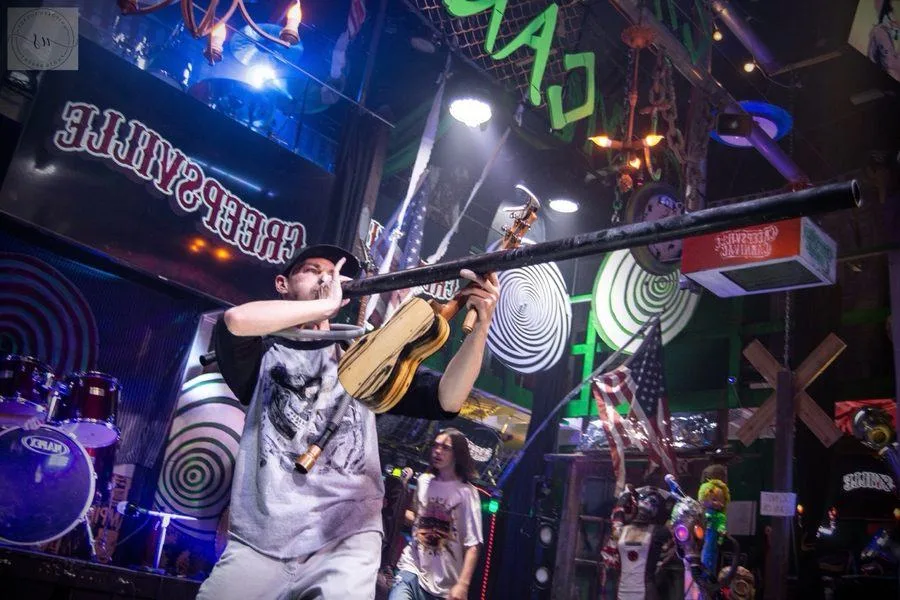
THE STREETThe language didn't start with the gargoyle. It started on a sidewalk. I got out of homelessness playing the didgeridoo :: busking felt like a more honest trade than panhandling. Sound for coins. Value moving in both directions. That was the entire plan. There was no wellness protocol. There was a man, a drone, and a hat on the pavement.
I had no idea what the instrument was doing to me. I learned the words years later ::
UNKNOWING PROTOCOL :: DIDGERIDOO
I thought I was avoiding panhandling. I was rebuilding a nervous system.
Off the street, I found out the thing I'd stumbled through had a name :: neuroplasticity. I had grown up believing a brain, once broken, stayed broken. Learning that it rewires :: that mine already had :: might be the single most hopeful piece of information I have ever been handed. I built a career on it :: college counselor, then life coach, through the early 2000s, specializing in exactly that.
The body's native tongue.
EARLY 2000sThe coaching years came with a private reckoning. I was carrying autoimmune conditions, and somewhere in there I admitted the obvious :: I didn't have a good relationship with my own body. Not just the shape of it. The cells of it. The chemistry of it. The systems of it. I had been living above the neck and calling it health. One conviction reorganized everything after that ::
Humans don't speak English. We speak prosody first.
Tone before words. Melody before meaning. It's every infant's first language, and nobody ever actually stops speaking it. So I started giving my body permission to speak in it :: not sentences, sounds. The hurt-sounds. The heal-sounds. The want-sounds. Letting the system voice what it was actually carrying instead of translating everything into polite English first. Sometimes what came out was pretty. Sometimes it was ugly and dark, because that is what was in there. It became a meditative practice, then a doorway :: toning, sound healing, cymatics, and eventually the throat work, holding two and three tones at once.
The coaching kept confirming it from the outside. It was never what I said to a client that moved them :: it was how. The intonation, the intent, the energy under the sentence. You don't have to change the words to change the state. It's not what you say. It's how you say it.
A note before you press play :: you'll see thetongue.com all over this one. That was my coaching practice for a long time. I don't bill for it privately anymore :: the one-to-one work, and everything taught alongside it, now runs under The FED UP Society.
In the early 2000s I started calling the territory neurophonetics. That word now belongs to an academic field that studies something related but different :: the neural machinery of speech. What I meant ran the other direction :: not how the brain produces the voice, but how the voice retunes the body. The truer name arrived on its own :: bioprosody. Sound as chemistry. Phonetics as a lever.
The anatomy backs the name. The tongue and throat ride five cranial nerves :: the vagus among them. That is why the voice reaches so far into the body.
That lever became the most useful thing I owned in the coaching room. Not reframing in the usual sense, where you argue somebody into a better sentence. I'd have a client keep the sentence exactly as it was and say it a dozen different ways. Say it flat. Say it with a lift at the end. Say it slow, with the weight down in the chest. Three different people show up to answer, and none of them had to be talked into anything.
They could try on emotions the way you'd try on outfits, and take them off again just as easily. What that teaches underneath is the part I actually care about :: an emotion is not weather that happens to you. It has a felt chemistry. Posture, breath, tempo, tone, and the hormones that arrive a few seconds behind them. Move the body and the feeling moves. Most people have never once been told they are allowed to touch that lever.
And because I was a musician, it eventually did what everything in me does :: it became songs. Private ones, in a language with no English in it, where the emotion rides the sibilance and the inflection instead of the dictionary. For years it stayed exactly where it was :: mine. That is not the kind of thing you share with people. Everyone knows that. I knew it right up until Bobby.
Bobby.
SUMMER 2024In the early summer of 2024, a prolific songwriter named Bobby started dismantling a test I had been failing myself with for years.
Forty years of catalog behind him, much of it ghostwritten for bands whose names you would recognize in one syllable. I'm not going to list them, and the credits aren't the point. The point is that when a man with that resume tells you what he sees in your work, you are not being flattered by an amateur.
I kept asking, in effect, whether I was technically enough of a musician to deserve to make music. He kept refusing the question ::
You're not a musician. You're an artist.
Musicians define themselves by technical proficiency. People come to an artist for the energy, the heart, the thing only that person transmits.
We started a band together on the strength of that argument. I didn't fully believe him yet. I just kept showing up.
August 8th, 2024.
8 · 8 · 24I was renting a studio in a rehearsal pad, and downstairs the building was running a battle of the bands. Now :: the regulars at that pad were metalheads, and metalheads were the people I'd always felt freest around, so for a while I'd been trying my weird language out on them between sessions. I called it gargoyle, honestly, for lack of a better word. Which is the only reason the owner had a name for it when he told me to get up on that stage.
I pushed back with perfectly reasonable prerequisites :: I need my rig, I need to set up, I need to prepare. He said :: last band's playing. Just grab your uke and do your gargoyle thing. One song.
So there was no time left to manufacture the acceptable version of me. What walked onstage was the organism itself :: ukulele, didgeridoo, sound bowls, the strange voices :: at a battle of the bands, which on paper is a joke.
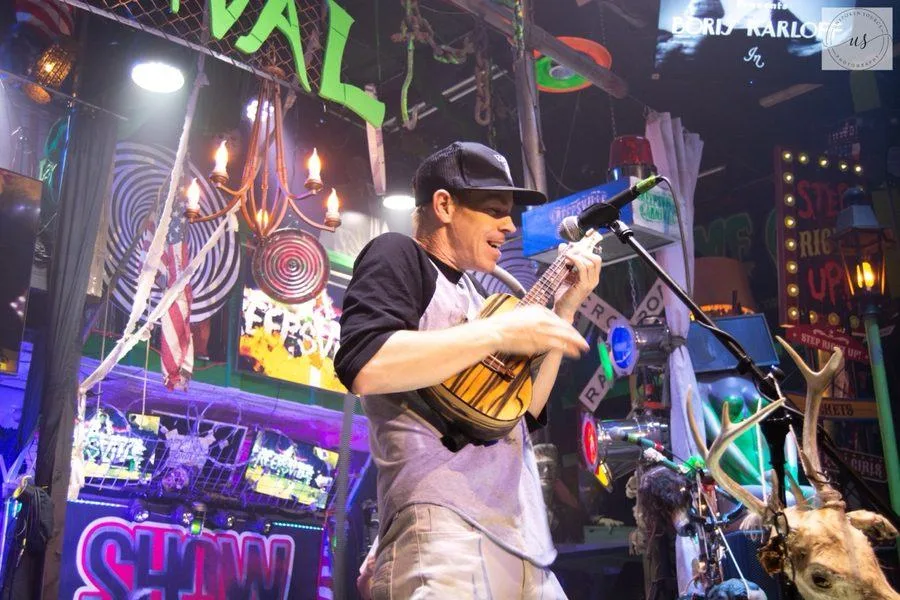
They ate it up. I came off the stage and people were asking where they could hear more. And I heard myself say ::
Wait :: you would listen to that?
That sentence was the crack. Some part of me had ruled, years earlier, that the real expression was permissible in private and illegible everywhere else. A room of strangers had just filed disconfirming evidence.
So I went back up to my studio while the state was still open and recorded the first gargoyle track that ever existed. Three passes :: ukulele and voice, then didgeridoo, then a backing pass of ukulele and voice. Mixed them. Listened. And ended up flat on my back on the floor, body buzzing with a newly profound acceptance of myself, a whole shelf of who I was allowed to be cracking as I lay there.
Unfortunately, Bobby died before we could finish what we'd started together.
But gratefully, not before I sat with him one more time and played him the gargoyle recordings. He told me this was the thing he had been talking about all along :: what he had waited his whole life to hear. Something that raw. That real.
The loop closed. Then it opened into everything on this page.
The story that was born from it.
AFTERThe mythology came later, and it came bigger than one night deserved :: a troupe of performers frozen as stone for about three thousand years. Fixed stone, consciousness intact. Watching, remembering, forgetting, arguing silently, waiting inside bodies that would not answer them. Freed on 8/8/24. Freed, specifically, to play.
People assume I wrote the story and then lived by it. The order was the reverse. The body got free first. The story arrived afterward, large enough to remember what had happened. It even took two years of retelling before the title finished itself :: first the stone let go, then the stone was freed, then the stone was freed to play.
And when I finally stood back and looked at what I'd written, I recognized it. I had handed myself an image for something I knew from the inside :: awareness intact, expression refusing to answer. Present, and unable to move the way the inside was moving. I'm not going to tell you what that condition is called, or whether you've lived it. The stone doesn't diagnose anyone. If it means something to you, you already know which years it means.
The gargoyle.
YEARS LATERHere is the part I still can't say with a straight face. I named the creature gargoyle for lack of a better word :: a placeholder, grabbed the way you grab a coat by the door. Years into it, I finally looked the word up.
on a cathedral, the gargoyle's job is to carry the water out of the masonry so the building doesn't crumble.
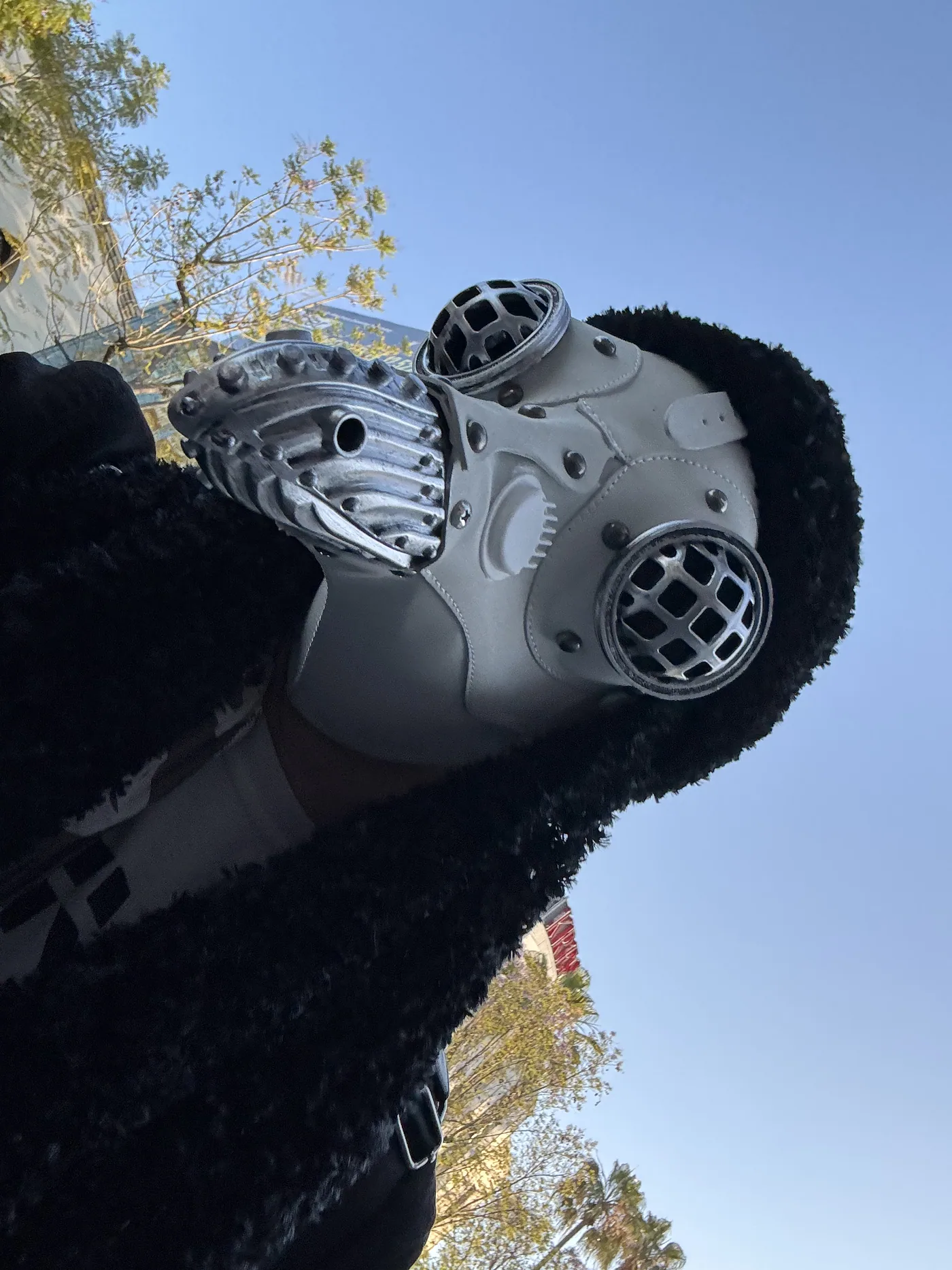
The throat saves the stone. It always did.
And I'm a man who sings in an invented language and spends part of every day in throat practice, learning to hold two and three tones at once. The placeholder turned out to be load-bearing. Make of that what you will :: I mostly stared at the ceiling for a while.
Metabolizing.
People ask if I healed by shedding trauma, layer by layer. Shedding is the wrong verb :: shedding implies waste. The way I say it :: and it's my metaphor, not a physiology lecture :: trauma is fat for the emotional system. Energy packed in a hurry, in a season with no time to digest anything, stored against a winter that then refused to end. You don't shed that. You metabolize it. It becomes motion. Every song I sing is running on calories I packed decades ago.
That's the pattern under everything on this page, once you see it.
What I actually believe.
I'll say the belief plainly, and I'll frame it honestly. I believe we are babes in a cosmic forest, just now learning to work with the density of this third dimension. I believe we're all chemists :: crappy chemists, because most of us don't know we're chemists :: and that we've each been handed a meatsuit that is a chemistry playset, so we can learn to work with matter and graduate, so to speak, to join our family in the cosmos. Not by leaving. Not astral projecting out with a tether back to the body. By bringing the body with us.
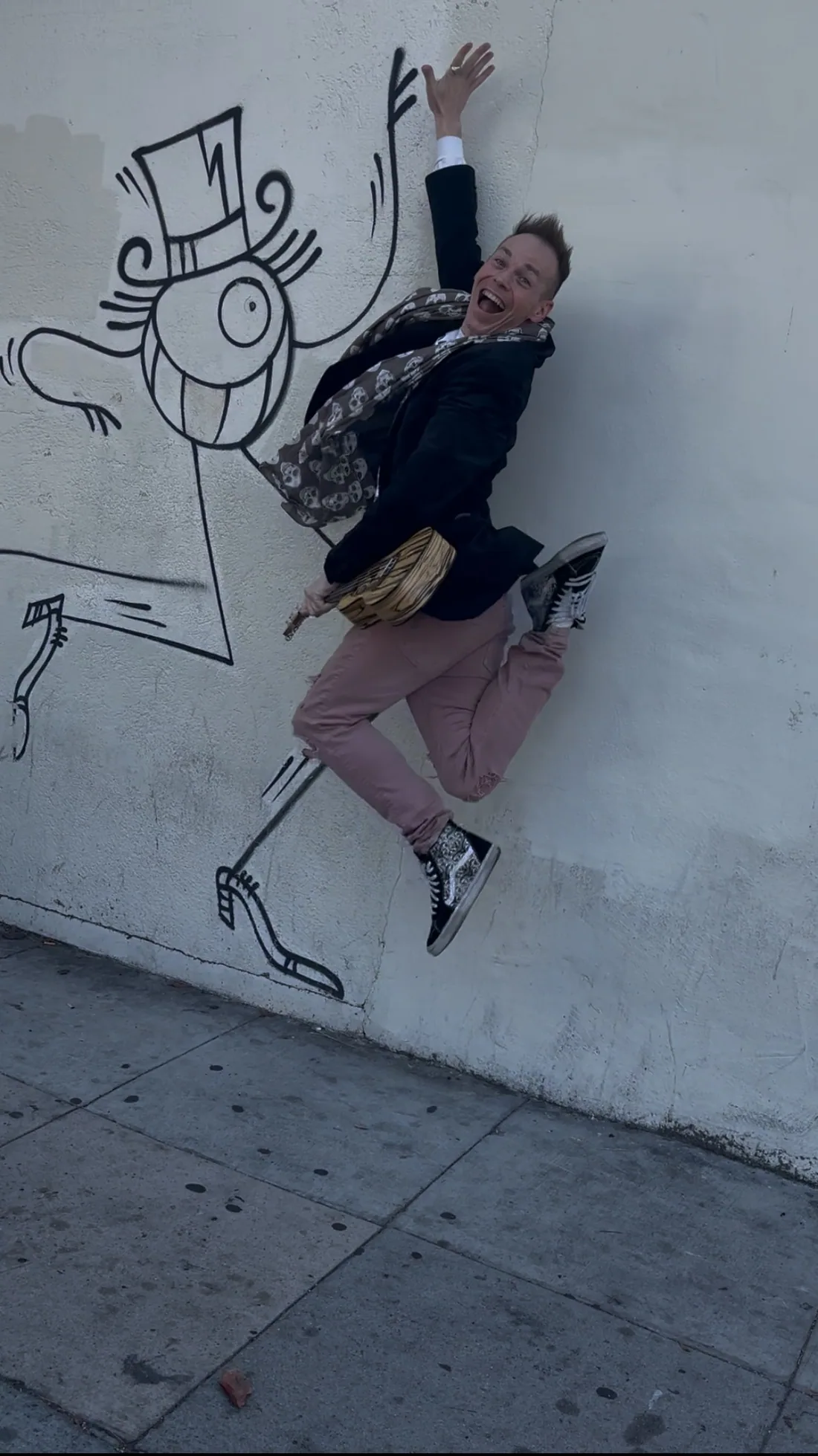
Is that true? I hold it as a chosen belief structure, not a truth claim. I keep it because it is a strong working hypothesis that gives me a framework for reality and a loving relationship with my body. Notice what it does that nothing else in the catalog above does ::
Every other story on this page treats the meat as the obstacle. This one makes it the curriculum.
Who is the pilot.
One correction before the door, because even this site's name can smuggle the old ghost back in. You are the pilot, the body is the instrument :: said carelessly, that still leaves a little someone behind the eyes, operating the machine. Twenty-four centuries of dualism, back through the side door.
What the practice actually taught me is that the intelligence is distributed all the way down :: breath, reflex, fascia, emotion, immune response, pattern, song. The meatsuit was doing astonishing work long before "I" noticed. So piloting is not command. Piloting is a relationship :: learning to participate, consciously, in a living system's own intelligence. The path is working with intelligence :: not being intelligent at your body.
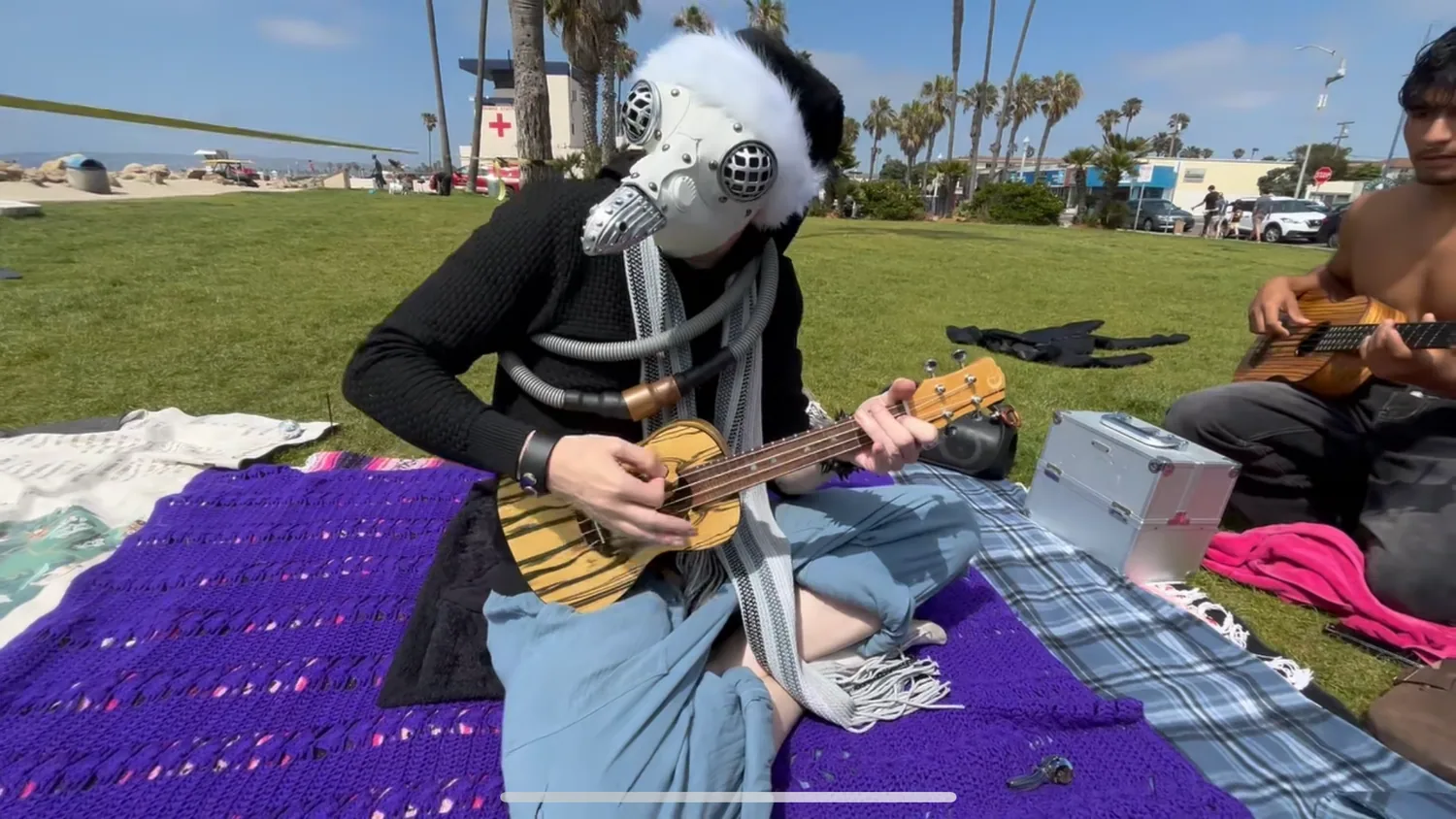
Nothing was wasted.
NOWOn 8/8, nothing new was installed in me. Capacities I'd spent years building for their own separate reasons :: didgeridoo, overtone work, hypnosis, the strange voices, the theatrical streak, the body practices :: assembled themselves into something I could not have planned, the moment the constraint loosened. Nothing was wasted. They were parts waiting for a composition.
the parts, composed
That is what piloting looked like for me. And this is the part I need you to hear :: my thaw ran through ukuleles and Tuvan tones and a horror circus. Yours won't. It shouldn't. Every instrument leaves the factory tuned differently, and the whole craft is learning the one you were issued. I can't hand you my flight path, and I wouldn't insult you by trying. Nobody can fly the aircraft for you. What I can do is sit in the right seat while you find out what your instrument does when the constraint loosens.
THE DOOR
Pilot was the only word that meant practice.
So here is where the practice went.
For years this was taught privately, one to one, paid for by the hour or folded into a membership. That has ended. The practice is being reorganized under The FED UP Society, an Arizona nonprofit corporation, so it can be taught openly, to more people, at low or no cost.
There is nothing to buy on this page and there is no waitlist for a product. The rebuild is happening in public.
Being rebuilt · under the Society
The curriculum, written down
The practice has lived in a room and in one person’s hands. It is being written so it can be taught by more than one person, in more than one city.
Classes, low cost to free
Group work in real rooms. Come to the class, give what you can. Some things in a body only show up when there are other bodies present.
The reference layer
This page keeps doing what it already does :: hold the term, the history and the field notes, in public, for free, for whoever lands here.
Existing one-to-one work continues by referral, quietly, and is not run by any organisation. It is not listed as a service and it is not sold here.
The rooms are in the Phoenix Valley for now, and it is growing beyond the Valley on its own :: people keep writing in from places I have never been. If you are somewhere else and want first word when something opens near you, say so below and I will tell you. If you are close enough to reach North Scottsdale, Circus Sundays runs every week.
And if this page found you at the right time :: write me. iam@ryantoday.com. A sentence is enough.
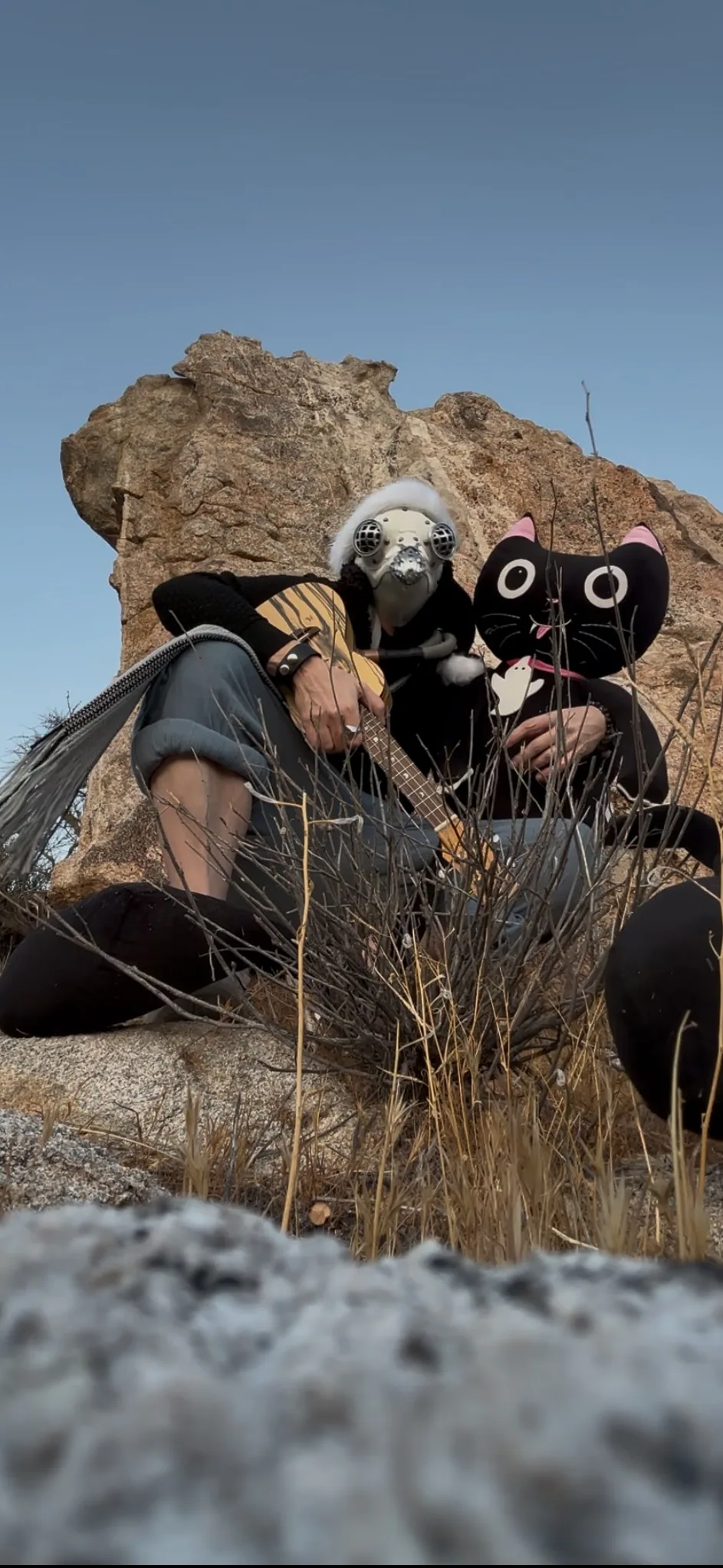
we're all family :: Ryan Today
FIELD NOTES :: QUICK ANSWERS
For the ones who skimmed.
What does meatsuit mean?
Slang for the human body, imagined as a garment or vehicle for the self. Popularized by the TV show Supernatural, where demons use it for the bodies they possess.
Is 'meatsuit' older than Supernatural?
The exact word was mainstreamed by the show, but the meat-as-body lineage runs back through Neuromancer (1984) and Terry Bisson's 'They're Made Out of Meat' (1991), and the body-as-container idea is at least as old as Plato.
What's the difference between a vessel and a meatsuit?
Consent. In Supernatural, angels need a yes; demons don't ask.
Did C.S. Lewis say 'You don't have a soul. You are a soul. You have a body'?
No. The line traces toward George MacDonald via an 1892 periodical, with a famous close variant in A Canticle for Leibowitz (1959). Lewis foundations list it as misattributed.
Why do people call the body a flesh prison?
It's Plato's prison metaphor, rebooted by memes and a video game boss fight. This page's position: it mistakes a relationship problem for a hardware problem.
What is the Meatsuit Pilot practice?
Learning to sense, interpret, and participate in reality through the body you were issued. Not mind over body :: the intelligence is distributed all the way down. There is no three-stage curriculum and nothing to override. One relationship, practiced.
Who is Ryan Today?
A neuroplasticity coach, artist, and founder of IMP Circus. His specialty is the body's uncounted senses :: interoception, nociception, the felt inside :: and the tongue and throat as a lever on the nervous system. Among his stage characters is the gargoyle Skex Pl'nesh. He goes by Ryan.
Who is the pilot?
The pilot is you, silly.